Four Ways to Grow Your Classically Educated Child This Summer

First published May 2018. Warmer days and longer light mean that summer has nearly found us once again. For most of us, the advent of summer brings a slower pace and freer schedule.  This combination provides parents with a unique opportunity to promote learning and engage their children’s minds outside of the classroom. Regardless of the season, however, the thought of “education at home” can … Continue reading Four Ways to Grow Your Classically Educated Child This Summer

Conquering Chaos: The Re-Enchantment of a Purposeful Life

I had the opportunity on Friday, April 4, 2025 to speak at Headington Hill in Springfield, MO. This is the transcript of that talk for their fundraising event. Conquering Chaos: The Re-Enchantment of a Purposeful Life III Here is a place of disaffectionTime before and time afterIn a dim light: neither daylightInvesting form with lucid stillnessTurning shadow into transient beautyWith slow rotation suggesting permanenceNor darkness … Continue reading Conquering Chaos: The Re-Enchantment of a Purposeful Life

Adler’s “Three Columns Revisited” Revisited

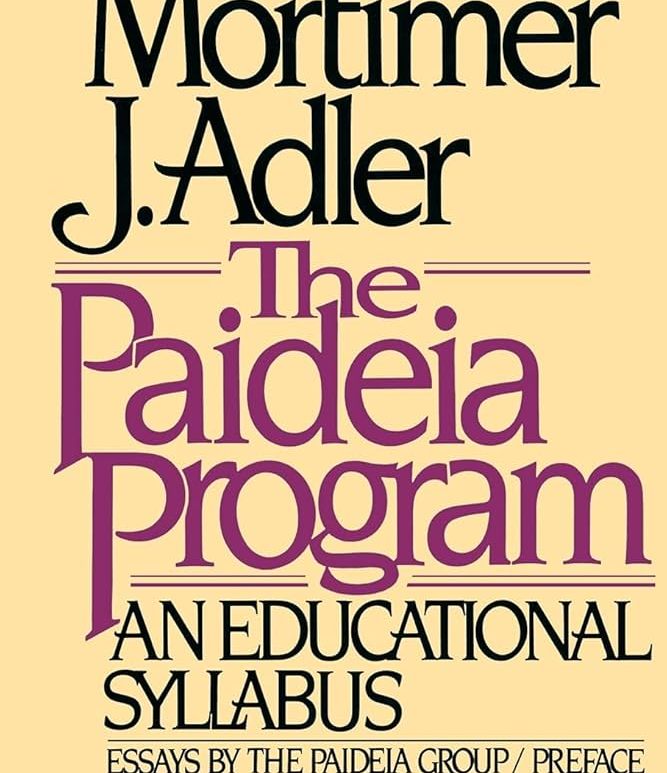
Depending on the stream of classical Christian education one has been trained in, Mortimer Adler’s work could be foundational, moderately common, and relatively obscure. Adler himself only came to faith in God late in life, but he spent much of his life defending the classical tradition and pushing towards a classical education for every child. In the Paideia Program (1984), a work by Adler and … Continue reading Adler’s “Three Columns Revisited” Revisited

A Catechism of Classical Christian Education

Last week I had the opportunity to lead approximately 25 classical high school educators in a teacher training at School of the Ozarks. In 12.5 hours of seminars (yes, we were thorough!), we discussed the purpose of classical Christian education; preparation for a school year, a week, a lesson; the portrait of a graduate from a classical Christian school; and classical and Christian pedagogy. Each … Continue reading A Catechism of Classical Christian Education

Jesus’ Great Commandment and Classical Christian Education (Monday Musings)

It’s been several years now since I wrote something in a series that I called “Monday Musings,” but as I begin my new role as Head of School at Sager Classical Academy and work through other thoughts I’ve had about classical Christian education for a while, it seemed like a good time to break it back out. The idea is that I muse upon some … Continue reading Jesus’ Great Commandment and Classical Christian Education (Monday Musings)

Review of Preston Atwood’s Cantate Domino

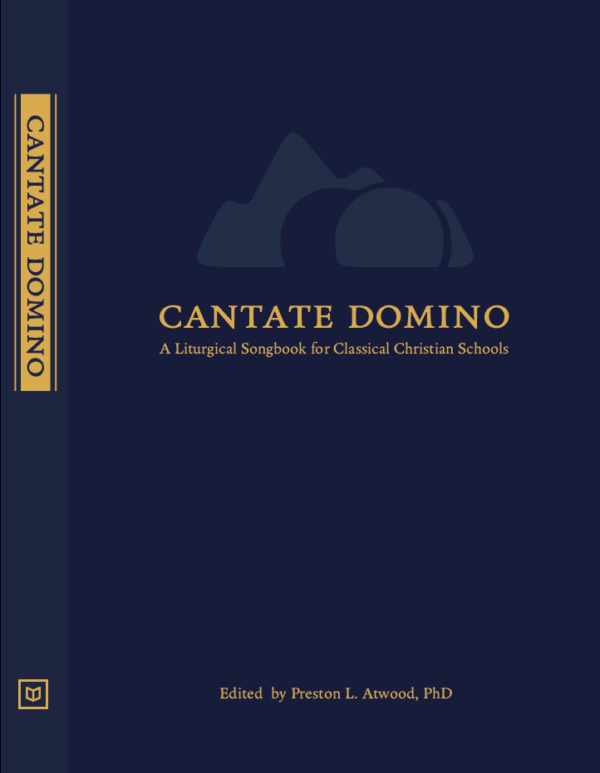
Atwood, Preston. Cantate Domino: A Liturgical Songbook for Classical Christian Schools. Hymnworks. We live in an age of ugliness. Certainly, much remains beautiful and beauty is still all around us, but the world at large has failed to distinguish between the truly, objectively beautiful and that which the masses deem to be beautiful–which is often ugly. Beauty can be in the eye of the beholder … Continue reading Review of Preston Atwood’s Cantate Domino

The Centrality of the Trivial: Grammar as a Liberal Art (Explorations in the Art of Grammar Series #6)

The Centrality of the Trivial: Grammar as a Liberal Art (Explorations in the Art of Grammar Series #6)[1] By Anthony G. Cirilla It has often been debated whether grammar is useful when studied “out of context,” though I have my suspicion that few who teach grammar actually envision their project in the classroom as ideally contextless. What would that mean? In absolute terms, the closest … Continue reading The Centrality of the Trivial: Grammar as a Liberal Art (Explorations in the Art of Grammar Series #6)

What’s Your Aim?

What’s Your Aim? By Sara Osborne The midpoint of a semester naturally prompts some reflection, for both teachers and students.  This half-way point often reveals whether a teacher’s fresh plan, new curriculum, or adjusted content has yielded its desired results.  Similarly, students take stock of their performance on class assignments and assessments and consider whether or not their study strategies are working as planned.  Interestingly, … Continue reading What’s Your Aim?

Classical and Christian: Abraham Kuyper on the Nature of Genuine Study

The classical renewal has been prompted—at least in part—by evident student skill and knowledge deficits, virtue-less environments for learning, disordered curricula, and postmodern pedagogies.  However, a true classical education aims to do more than simply plug the holes of a failing public education. If the purpose of genuine study is to know, analyze, and articulate what is True, Good, and Beautiful, the truest form of … Continue reading Classical and Christian: Abraham Kuyper on the Nature of Genuine Study

Assessment for the Classical School, Part 3: Facts, Skills, or Ideas?

By Carrie Eben, guest author In the first article in this series, I related the importance of assessment aligning with the purpose of a classical education. The purpose of a classical education is leading a student toward intellectual skills and virtue. This alignment happens best when education takes a contemplative posture which Josef Pieper calls, leisure, or rest (schole). In the second article of this … Continue reading Assessment for the Classical School, Part 3: Facts, Skills, or Ideas?

Assessment for Classical Schools, Part 2: Relationship, Soul-Orienting Conversations, and Types of Assessors

By Carrie Eben, guest author In the last article about classical assessment, I discussed that assessment needs to align with the purpose of classical education—which is growing in intellectual skill and virtue.  This is achieved through a contemplative posture of what Josef Pieper calls “leisure,” otherwise known as “schole” or rest.  While this sounds beautiful, what are the important components for contemplative growth in a … Continue reading Assessment for Classical Schools, Part 2: Relationship, Soul-Orienting Conversations, and Types of Assessors

Assessment for Classical Schools, Part 1: A Philosophy of Leisure

By Carrie Eben, guest author Every time I teach a seminar on authentic assessment for classical teachers and homeschool parents, I begin by asking the question, “What is the purpose of education?” following up with, “Who do you want your students to be when they leave your school/home? Without fail, teachers and parents, give answers such as “Lifelong and autonomous learners,” “A person who loves … Continue reading Assessment for Classical Schools, Part 1: A Philosophy of Leisure