A Catechism of Classical Christian Education

Last week I had the opportunity to lead approximately 25 classical high school educators in a teacher training at School of the Ozarks. In 12.5 hours of seminars (yes, we were thorough!), we discussed the purpose of classical Christian education; preparation for a school year, a week, a lesson; the portrait of a graduate from a classical Christian school; and classical and Christian pedagogy. Each … Continue reading A Catechism of Classical Christian Education

A Philosophy of Education

A philosophy of education should be rooted in anthropology, in our understanding of what a human being is and is for (telos). What one believes about a human being should significantly impact how one human being aims to educate another. But a good anthropology is rooted in a proper theology, or one might say, Theology proper; that is, who is God? A right understanding of … Continue reading A Philosophy of Education

Jesus’ Great Commandment and Classical Christian Education (Monday Musings)

It’s been several years now since I wrote something in a series that I called “Monday Musings,” but as I begin my new role as Head of School at Sager Classical Academy and work through other thoughts I’ve had about classical Christian education for a while, it seemed like a good time to break it back out. The idea is that I muse upon some … Continue reading Jesus’ Great Commandment and Classical Christian Education (Monday Musings)

Poetry as Pedagogy

Earlier this week I shared a summary and handout from my ACCS presentation on June 20 entitled, “Theological Thinking and Other Unnatural Acts.” On June 21, I also had the opportunity at the ACCS Repairing the Ruins conference to present on “Poetry as Pedagogy.” My goal in that presentation was to convince attendees that poetry is not simply content to be taught, but in fact … Continue reading Poetry as Pedagogy

Theological Thinking and Other Unnatural Acts

On June 20, I had the opportunity to present a workshop at the annual ACCS Repairing the Ruins Conference entitled “Theological Thinking and Other Unnatural Acts.” The design of the talk was to help educators think about the importance of teaching students HOW to read the Bible, not just what to believe about the Bible. In an educational model so often prioritizing teaching students the … Continue reading Theological Thinking and Other Unnatural Acts

Review of Preston Atwood’s Cantate Domino

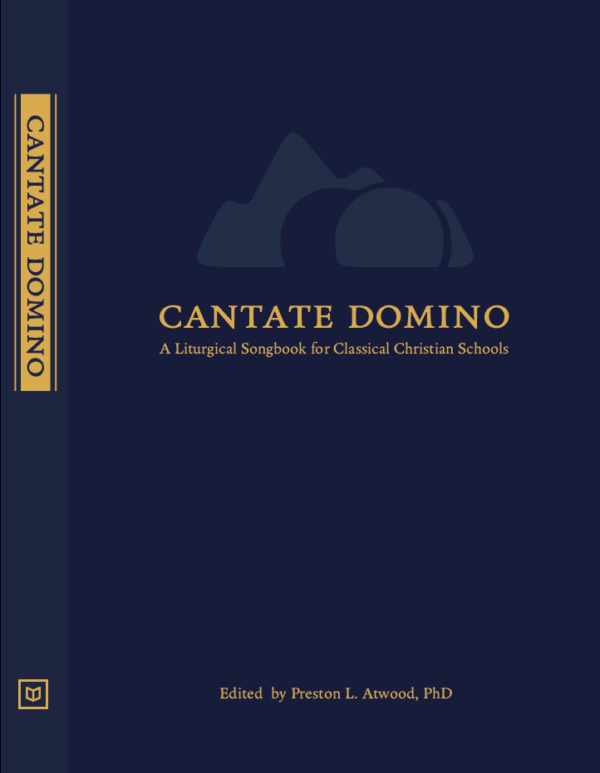
Atwood, Preston. Cantate Domino: A Liturgical Songbook for Classical Christian Schools. Hymnworks. We live in an age of ugliness. Certainly, much remains beautiful and beauty is still all around us, but the world at large has failed to distinguish between the truly, objectively beautiful and that which the masses deem to be beautiful–which is often ugly. Beauty can be in the eye of the beholder … Continue reading Review of Preston Atwood’s Cantate Domino

What’s New?

This past year has been a busy one, and a year of change for The Classical Thistle. In the summer of 2023, Dr. Scott McElvain, co-founder of The Classical Thistle, decided to hand over his role and responsibilities to me (Kyle Rapinchuk) as the sole owner and operator of the website. One of our biggest activities together, however, was planning the March conference at School … Continue reading What’s New?

The Centrality of the Trivial: Grammar as a Liberal Art (Explorations in the Art of Grammar Series #6)

The Centrality of the Trivial: Grammar as a Liberal Art (Explorations in the Art of Grammar Series #6)[1] By Anthony G. Cirilla It has often been debated whether grammar is useful when studied “out of context,” though I have my suspicion that few who teach grammar actually envision their project in the classroom as ideally contextless. What would that mean? In absolute terms, the closest … Continue reading The Centrality of the Trivial: Grammar as a Liberal Art (Explorations in the Art of Grammar Series #6)

Words Don’t Mean Things (Explorations in the Art of Grammar Series #5)

I meant to post this near the end of summer 2022 as part of our series on Grammar, but alas, it got away from me. If you want to read the rest of the series: Part 1, Part 2, Part 3, and Part 4. One of the more surprisingly enjoyable reads of my college career was Boswell’s Life of Samuel Johnson. I loved (and still … Continue reading Words Don’t Mean Things (Explorations in the Art of Grammar Series #5)