
A philosophy of education should be rooted in anthropology, in our understanding of what a human being is and is for (telos). What one believes about a human being should significantly impact how one human being aims to educate another. But a good anthropology is rooted in a proper theology, or one might say, Theology proper; that is, who is God? A right understanding of God, His world, and His design and purpose for human beings undergirds all educational philosophy.
The Bible identifies a human being as the only creature created in God’s image. We are body and soul, rightly united and configured. Simply put, this means that although our unique personhood may be in our soul (since it is capable of existence apart from the body in the intermediate state), our bodies are nevertheless designed by God as good, and true, full humanity is a unity of body and soul in a single person. Consequently, education must speak to the soul, but cannot ignore the body in the process. Likewise, being created in God’s image includes, though is not reducible to, our existence as relational beings. God has designed us for multi-directional relationships: upwards with God, outwards with others, inwards with ourselves,[1] and downwards with creation, which we are to rule and steward faithfully.
This anthropology is also rooted in a profound Theology, namely the revelation of the Trinitarian God. God has eternally existed in three persons: Father, Son, and Holy Spirit. The eternal existence of the Triune God is a mutual indwelling, a flowing forth in love outward towards the other persons of the Trinity. Hence, God not only loves, but is love (1 John 4:8), since His very nature is to exist in relations of love. The doctrine of the Trinity is not some theological abstraction, however, but an integral part of our being as humans. Because God is love and has existed eternally without any deficiency, we know from Scripture that God does not need us. Yet, here we are, which can only mean that God wants us, wants to share with us the love that the Triune God has had for eternity. Moreover, because God does not need us, but rather wants us, we can be confident that we are not things to be used, but rather persons who are loved. A proper theology and anthropology, therefore, tells us that each and every human being is a creature created in the image of God, designed as body and soul rightly united in that unique person before us, made for relationship, possessing inherent worth and dignity, and exists as a person loved by the eternal God. Only once we grasp these realities can we begin to understand what education is, or should be.
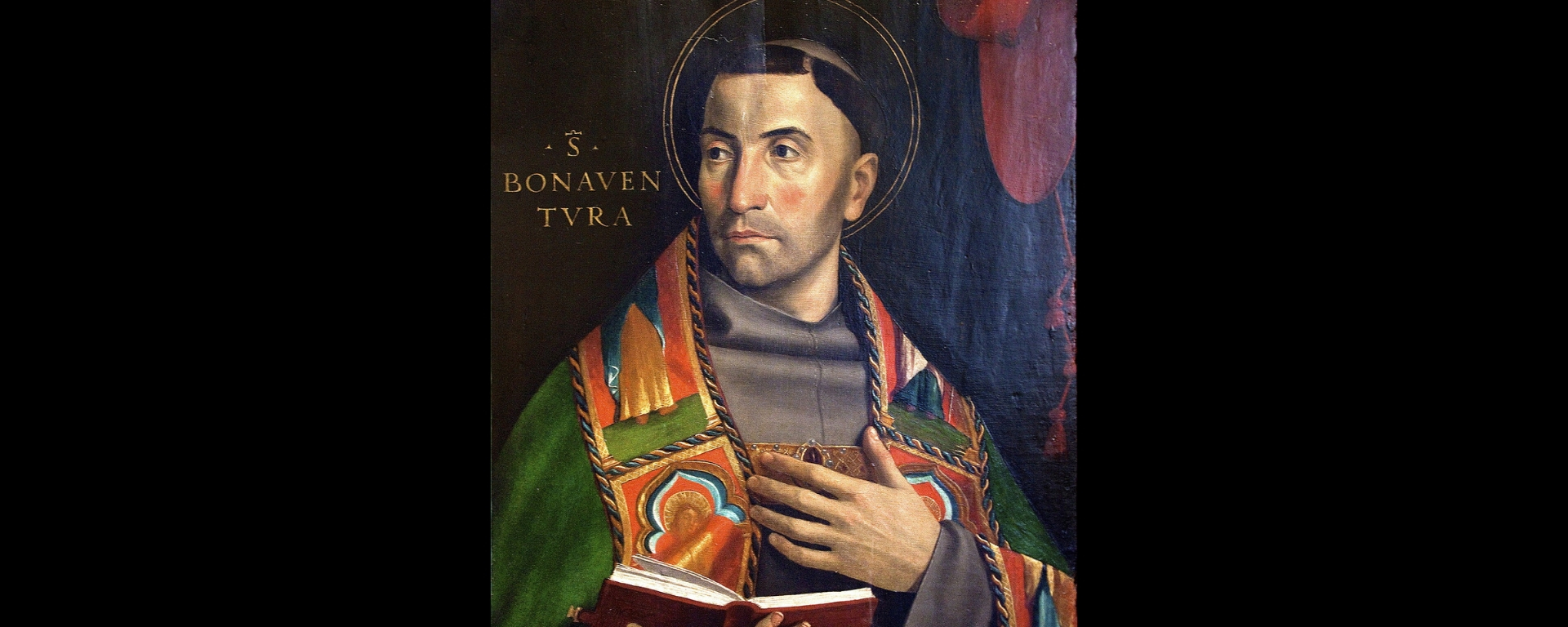
I believe that education, properly understood in light of this anthropology and theology, requires us to see all learning as an act of worship and all teaching as an act of discipleship. How, then, can we best accomplish this task? On account of these anthropological and theological beliefs, I think classical Christian education, especially in how it was conceived and practiced among medieval Christians (though certainly with different application to the 21st century), is the best means of educating students. Over the past decade, the works of St. Bonaventure and Hugh of St. Victor, in addition to the Bible, have been influential in my understanding of Christian education, especially how a medieval Christian education can provide helpful ways forward in Christian education today.[2]
My consideration of these two theologians has demonstrated commonalities in their view that all education has as its goal to lead us back to God. Whether in terms of “restoring the divine likeness” or of a “journey of the mind to God” in a spiritual ascent, both theologians see the Eternal Logos as the origin of all creation and the proper telos of that creation. Since all things come from the Word of God and will return to the Word of God, all truth discovered in various branches of knowledge lead back to the same source, that which Hugh called the “divine Idea or Pattern.” Likewise, both Hugh and Bonaventure identify the liberal arts (especially the Trivium) as foundational knowledge by which our minds, intellects, and reason can meditate upon and contemplate God Himself. Thus, although the various arts—whether exterior, inferior, interior, and superior—are all proper objects of study, none of them terminate in themselves. Rather, knowledge of these arts must flow through them back to the One from whom they all find their origin.
Approaching education today with these conclusions can have profound implications for our understanding of education, especially in four key areas. First, Hugh and Bonaventure can help us reclaim the purpose of Christian education. Second, Hugh and Bonaventure can help us recover the Great Tradition—both Christian and “pagan.” Third, Hugh and Bonaventure can help us rediscover the liberal arts and their natural role in cultivating wisdom and virtue and leading us back to God. Fourth, Hugh and Bonaventure can help us renew the cooperation between the church and the academy. Each of these four areas prove profoundly important in a truly humanizing, Christ-centered education.
These four lessons suggest to me three necessary practices moving forward. First, I propose we refocus orientation programs, academic offerings, cocurricular activities, and faculty development towards the goal of discipleship without sacrificing academic rigor. Second, we must refocus the academic programs on the liberal arts. Finally, we must become more explicitly confessional and connect the work of the academy more closely with the Church. A robust anthropology and theology, taken alongside the Scriptures and the insights of Christian educators such as Bonaventure and Hugh, form the foundation and framework for my philosophy of education.
[1]Note that these three relationships constitute the heart of Jesus’ Great Commandment: Love the Lord your God (upward) with all your heart, soul, mind, and strength. And love your neighbor (outward) as yourself (inward).
[2]What follows are some brief summarizing lessons I learned from Hugh and Bonaventure, which I presented (remotely) for the 2020 Evangelical Theological Society annual meeting. I also then further developed my work on Bonaventure specifically in a published essay on the topic, “St. Bonaventure and the Future of Christian Education” for a special issue on historical pedagogues in the IJCE.
 The Classical Thistle